Case Study

Raj Stationery

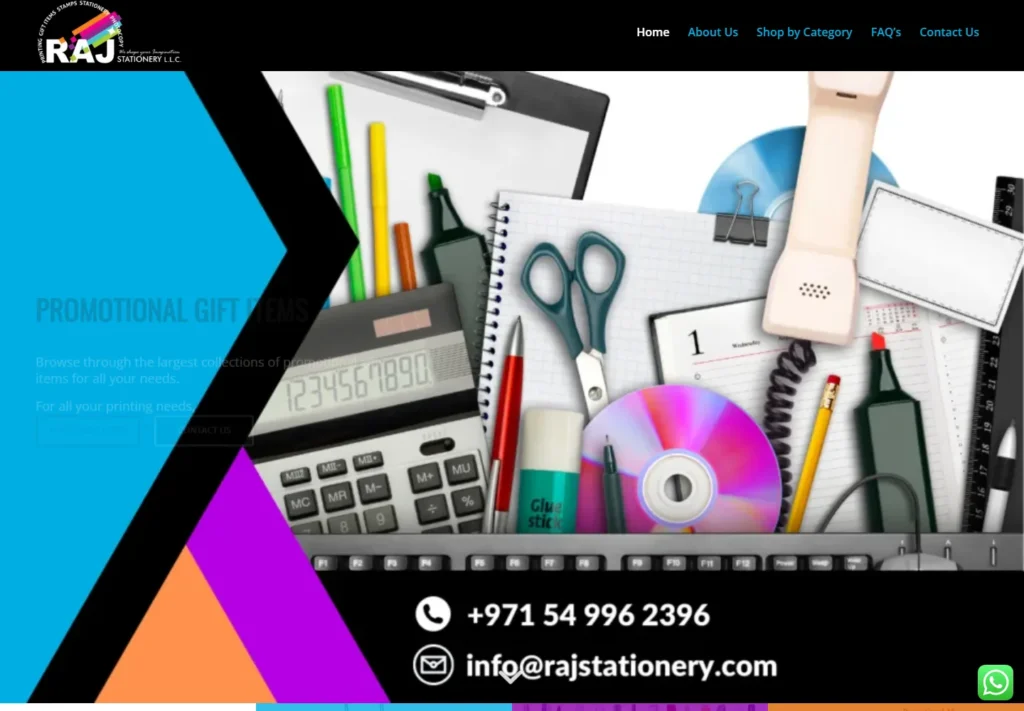
Raj Stationery LLC supplied branded promotional products across a large catalogue of categories and styles. We built a searchable, easy-to-browse product catalogue that helped buyers filter products, view options and request customized pricing through enquiry and WhatsApp channels.
IndustryWholesale & Distribution
ServicesWeb Design & Development, Marketplace & Ecommerce Growth
PlatformWordPress, PHP, MySQL +7 more
Raj Stationery

The Challenge

Making a Custom-Quote Catalogue Feel Easy to Shop

Raj Stationery was starting online from scratch, but its sales model could not use conventional ecommerce pricing. Branded promotional products are quoted according to quantity, printing method, logo colours and customization. The new website therefore needed to make 269 products across 62 category and subcategory paths easy to explore without showing prices or a checkout that could mislead buyers.

  • No existing website or searchable digital catalogue
  • Pricing changes with quantity, printing and customization
  • 269 products needed a clear route into online discovery
  • 62 category and subcategory paths had to remain navigable
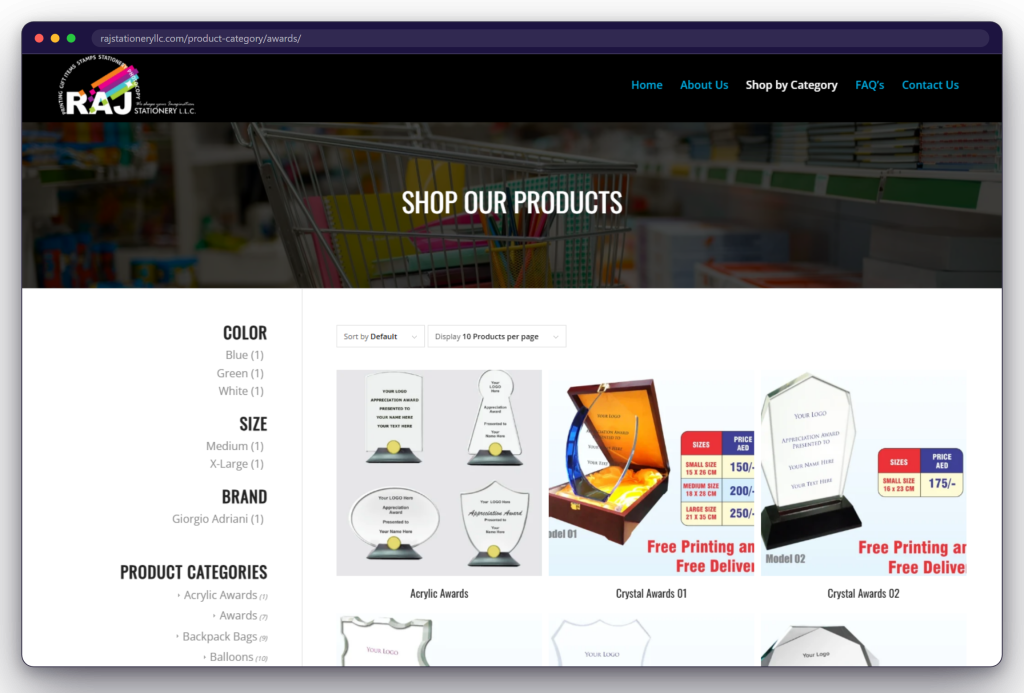
  • Buyers needed to narrow products by colour, size and brand
  • Every product needed a direct path to the sales team

Project Overview

Building a Quote-Led Ecommerce Catalogue From Scratch

Saiftec designed and developed Raj Stationery’s first ecommerce catalogue from the ground up on WordPress and WooCommerce. Instead of forcing a standard cart flow onto a quotation-based business, we used familiar ecommerce patterns—category navigation, product grids, filters, product pages and related items—then directed product interest into enquiry and WhatsApp conversations.

New Ecommerce Build
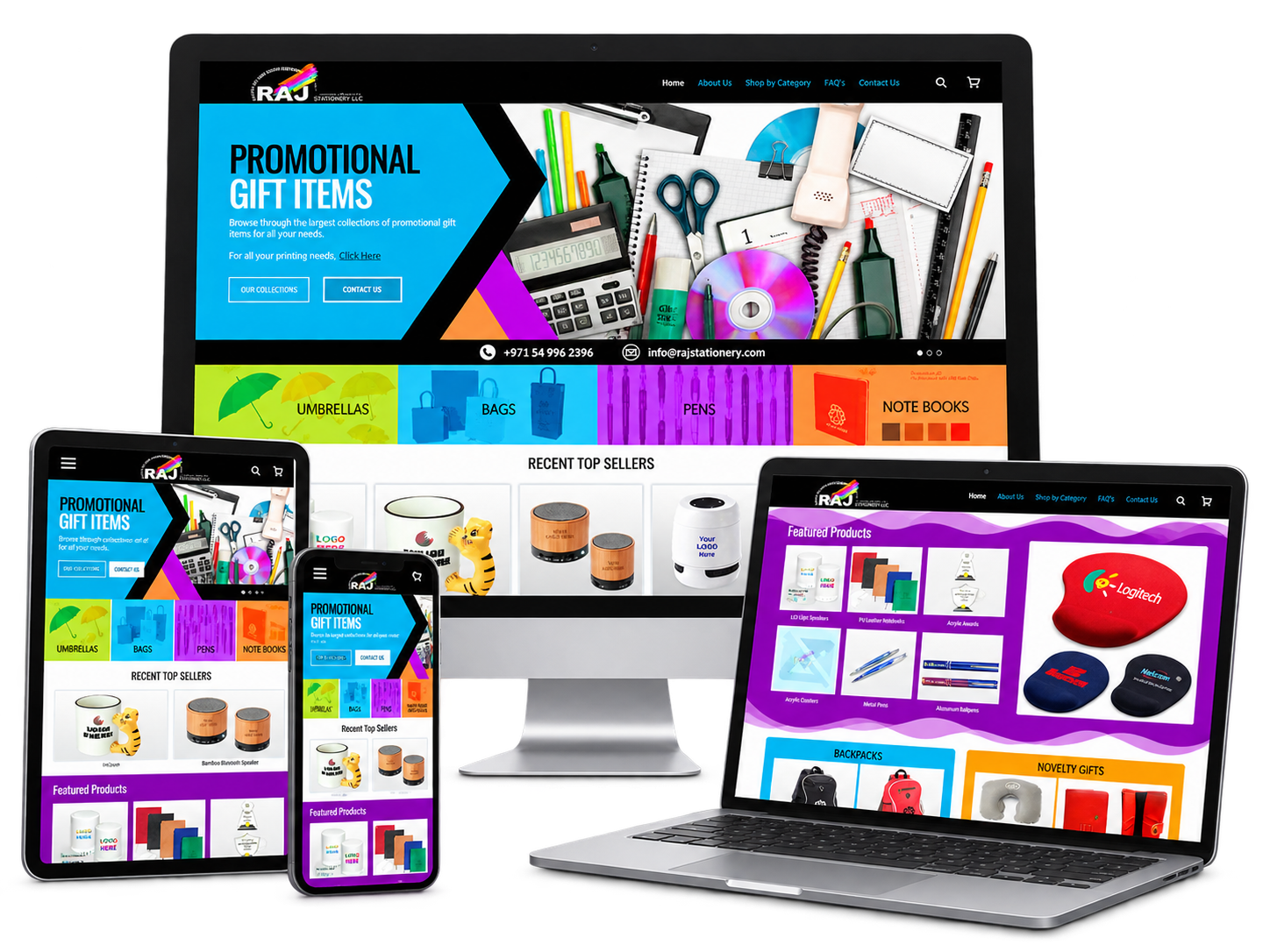
Raj Stationery LLC website displayed on desktop
Raj Stationery LLC website displayed on mobile
  • 269 catalogue productsA substantial promotional-products range was organized for online discovery.
  • 62 catalogue pathsCategories and subcategories gave buyers focused ways into the range.
  • Quote-led ecommerceStorefront browsing worked without premature pricing or checkout commitments.
  • Team-managed catalogueProducts, attributes and categories were maintainable in WordPress.

Our Solution

A Product Catalogue Designed to Start the Right Conversation

We combined the browsing clarity of ecommerce with the flexibility of a quotation-led sales process. Buyers could explore the range visually, move through categories, narrow products with useful attributes and open an individual product page without encountering a price that might not apply to their order. Enquiry and WhatsApp actions then handed qualified interest to the sales team.

Discuss a similar Project

  • A structured WooCommerce catalogueA familiar product-grid experience organized the full promotional range.
  • Nested category navigationParent and child categories moved buyers from broad ranges to relevant products.
  • Product filters that reduce the choiceColour, size and brand filters supported faster product discovery.
  • Individual product detail pagesEach item had its own image, category context and related-product path.
  • Pricing and cart removed deliberatelyThe interface avoided committing to a price before quantity and customization were known.
  • Enquiry and WhatsApp conversion pathsInterested buyers could move directly from a product into a sales conversation.
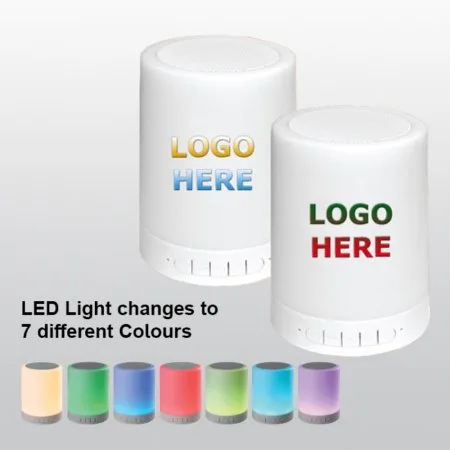
Customizable Bluetooth speakers available in seven light colours
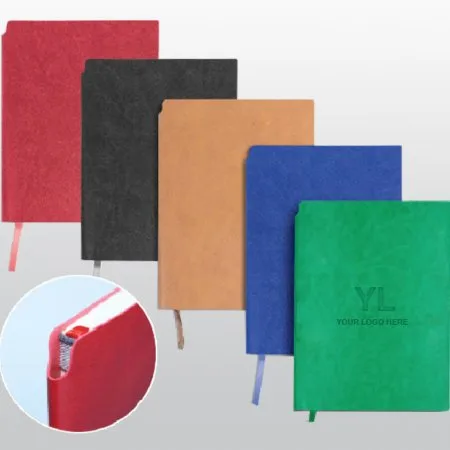
PU leather notebooks in multiple colours for custom branding
Raj Stationery product page with a prominent Send Inquiry action
Product enquiry path

Outcomes

What the New Catalogue Makes Possible

  • 269 products organized for online discoveryThe delivered catalogue turned a substantial offline range into a visual, browsable digital resource.
  • 62 organized category pathsBuyers could enter through focused categories and subcategories instead of scanning one undifferentiated list.
  • Product interest had a clear enquiry pathThe delivered journey preserved quote accuracy while giving every item a clear next step.
  • A maintainable catalogue foundationProducts, attributes and categories were manageable through WordPress while the business operated.
The Challenge
Branded merchandise cannot carry a shelf price. What it costs depends on the quantity, the print method and how many colours the logo needs, so one number on a product page would be wrong for nearly every buyer who saw it. Yet a buyer still wants to browse a few hundred items the way they browse a shop, narrow to the ones in their colour, then ask.
  • Merchandise has no shelf price, only a quote
  • Cost depends on quantity and print method
  • A few hundred items still have to be browsable
  • Buyers narrow by colour before anything else
  • A shown price would be wrong for most buyers
  • Trade buyers would rather message than type
  • Sixty-two categories have to stay navigable
Project Preview

A Look at the Finished Work

Our Solution
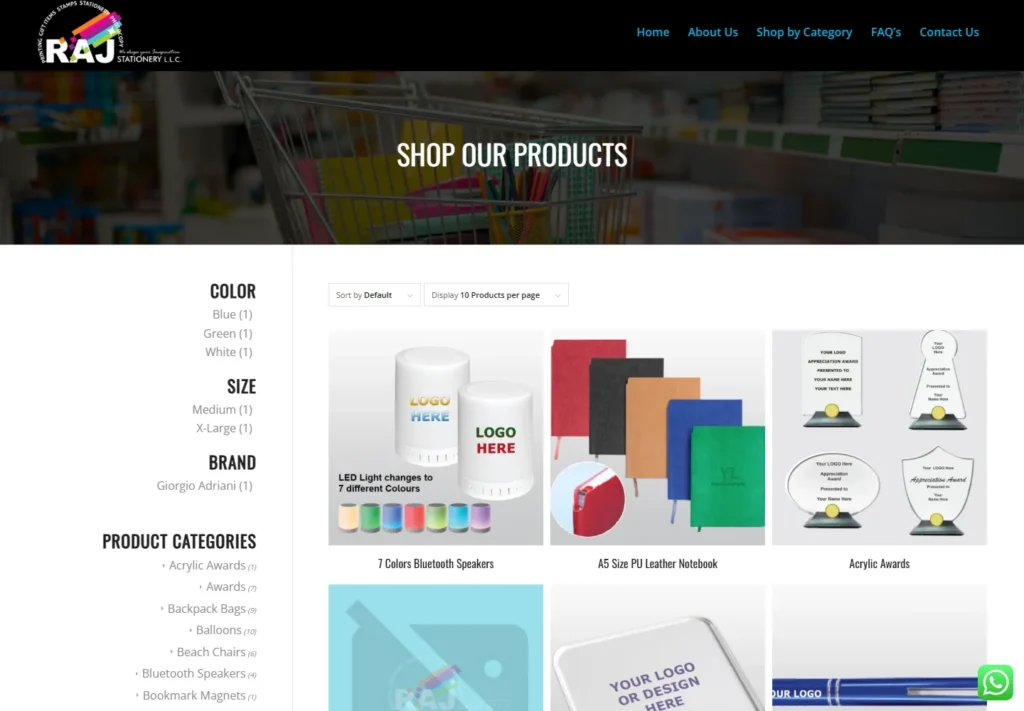
Everything is in the catalogue with photographs, categories and attributes, so a buyer can cut a few hundred products down by brand, by colour and by size much as they would in a shop. Prices and the basket are switched off deliberately, so nothing on the page commits to a figure nobody can honour yet, and each product ends in an enquiry. WhatsApp sits beside it.
  • Every product in one browsable catalogue
  • Sixty-two categories, nested where it helps
  • Filters for brand, for colour and for size
  • Prices and basket switched off on purpose
  • Each product ends in an enquiry
  • WhatsApp beside the enquiry route
  • A photograph on every product page
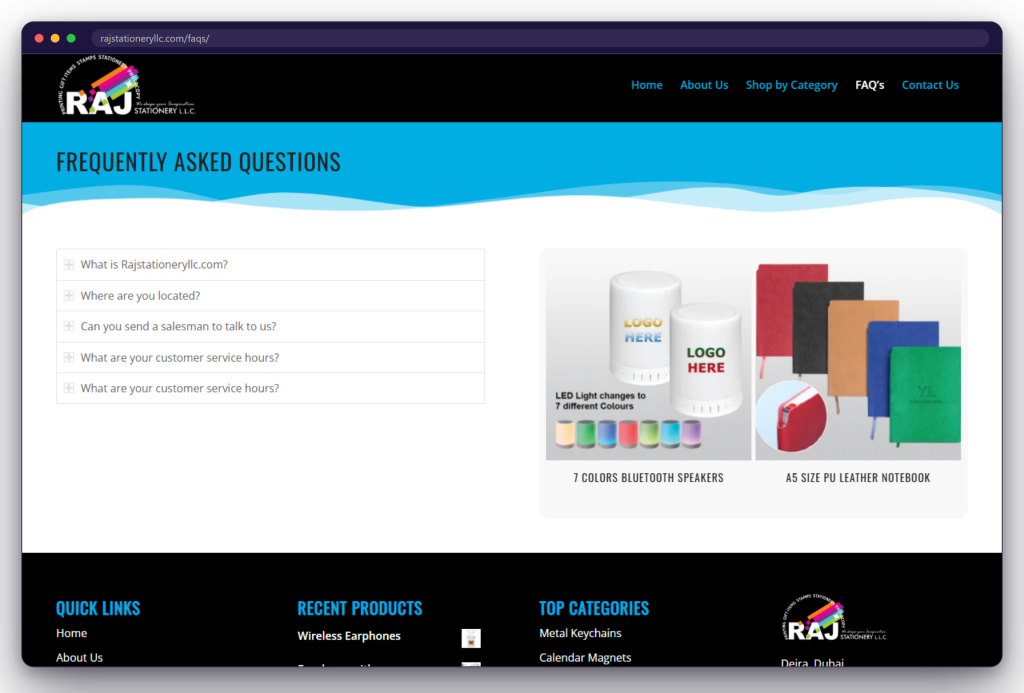
  • An FAQ page for the ordering questions
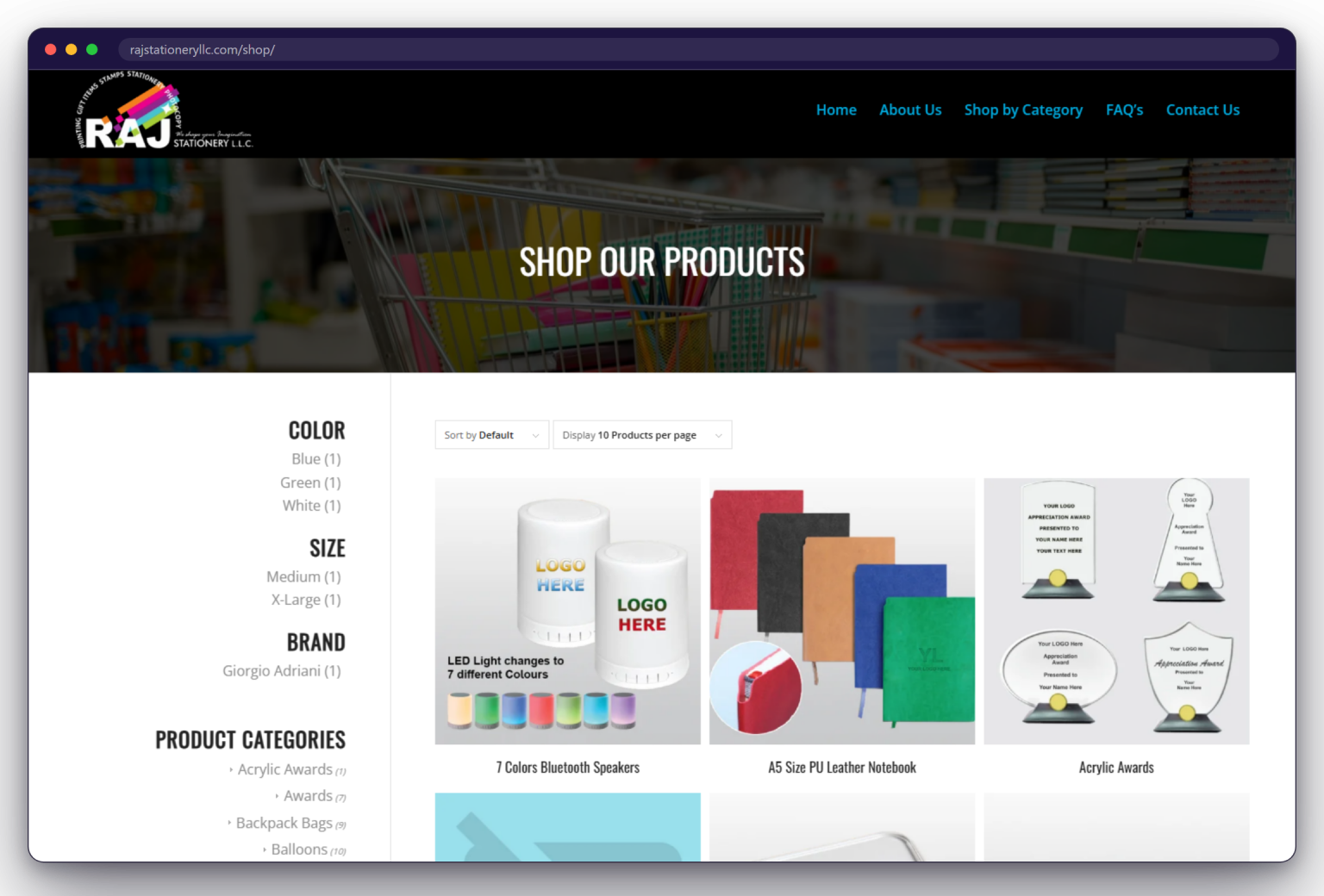
A page from the Raj Stationery website: rajstationeryllc.com/shop/
  • Catalogue, not shop

    Hundreds of items, no basket

  • Filter to the fit

    Brand, colour and size

  • Enquiry per item

    Each product ends in a form

  • Seen before asked

    A photograph on every item

Outcomes

What Changed After Launch

  • Sixty-two categories stay usable

    A buyer cuts the catalogue down by brand, colour and size, which is the only way this many items can be shopped without a search term.

  • No figure anyone must honour

    Prices and the basket are off by design, so nothing commits to a number before the quantity and the printing are known.

  • Every item is photographed

    This kind of buyer chooses with their eyes first, so each product carries an image instead of a line in a spreadsheet.

  • The range belongs to the team

    Products, categories and attributes live in WordPress, so a new supplier range is added in-house as it arrives.

Client Feedback

What Raj Stationery LLC Says

Saiftec built The Big Zen’s first website around the restaurant’s menu and customer essentials, combining cuisine-led browsing, a downloadable takeout menu, food photography, and a direct route to its Whitby location and phone numbers.
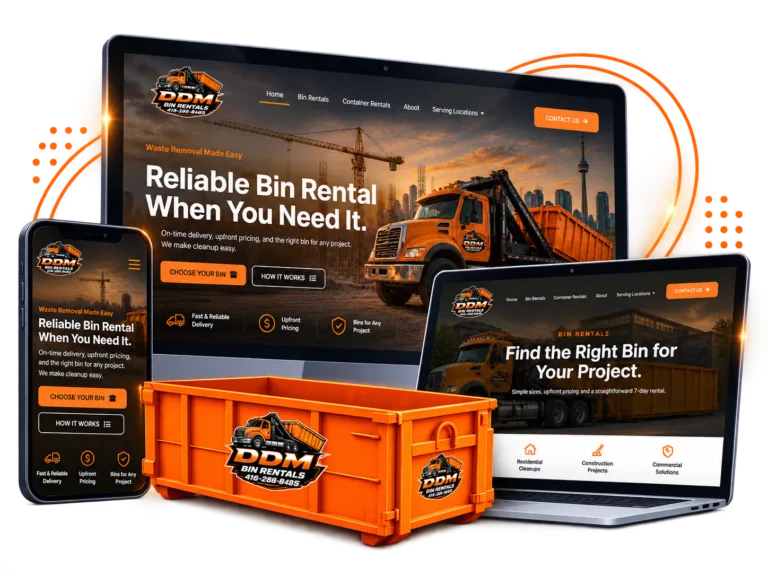
Saiftec built DDM Bin Rentals’ first website as a custom WordPress and WooCommerce rental platform, guiding customers from bin or container selection through delivery details and a Stripe-supported review-and-payment journey.
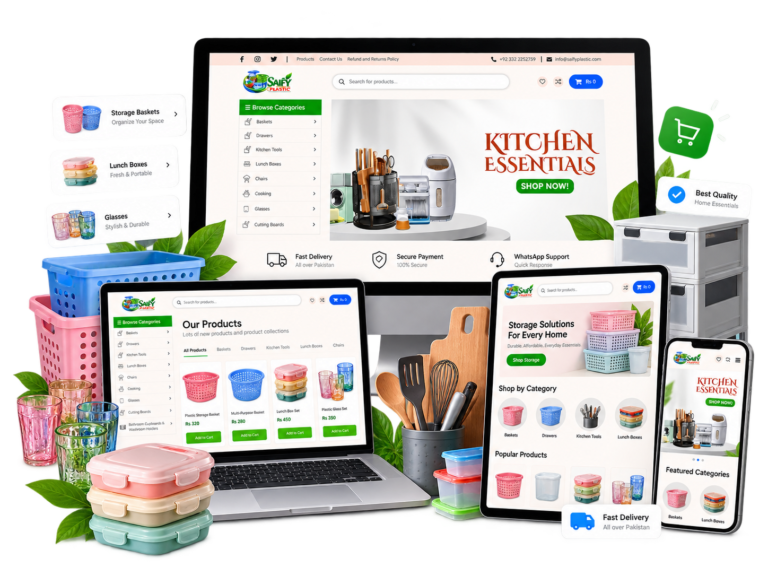
Saiftec enhanced Saify Plastic’s existing ecommerce website through payment-method reconfiguration, a Cart-to-WhatsApp module, and targeted component optimization while preserving the live product catalogue and core WooCommerce journey.
Technology Stack

Built With a Modern Stack

The platform, languages and tools the finished site runs on.
FAQ

Frequently Asked Questions

Which marketplaces should we sell on first?

Start with one, and choose it on category fit and margin rather than raw traffic. Amazon has the largest audience and the strictest operational demands; Etsy suits handmade and personalised goods; eBay still performs strongly for parts, refurbished and hard-to-find items; Walmart is less crowded and easier to rank in early. We look at your margins after fees and shipping before recommending anything, because a channel that cannot carry your cost base is not an opportunity.

How long does it take to get approved and launched?

Account registration and verification typically take one to three weeks depending on the platform and how quickly business documents come together. Category approval for restricted products can add longer. Once the account is live, a straightforward catalogue can be listed and selling within a fortnight. We supervise the first weeks closely, because early metrics — late shipment rate, defect rate — set your account standing and are much cheaper to protect than to repair.

How do you stop us overselling across channels?

By making one system the single source of truth for stock and syncing everything else to it, so a sale on any channel adjusts the same number. Which system takes that role depends on how you already work — sometimes the POS, sometimes the ecommerce platform, sometimes an ERP. We also hold a small buffer on fast-moving lines, because no sync is instant and an oversell costs account health, not just a refund.

Do you handle marketplace advertising as well as listings?

Yes, though we usually fix the listing first. Advertising a poorly optimised product page raises your cost per sale and hides the real problem — paid traffic converts on the same content organic traffic does. Once titles, images, attributes and reviews are in order, we run sponsored campaigns with a target advertising cost of sale you agree in advance, and report on ad spend as a share of revenue rather than clicks.

What happens if our marketplace account is suspended?

We treat it as an emergency, because reinstatement gets harder the longer it runs. First we identify the specific policy cited rather than guessing, then prepare a plan of action addressing root cause and preventative steps in the format the platform expects. Most suspensions trace back to a measurable metric — late shipments, inauthentic claims, safety complaints — which is exactly why we monitor account health continuously rather than reacting to it.

Do we still need our own website if we sell on marketplaces?

Yes, and the reason is commercial rather than sentimental. On a marketplace you rent the customer relationship: you do not own the buyer’s contact details, you compete on the same page as substitutes, and a policy change can alter your economics overnight. Your own store carries better margins, lets you build an email list and retarget, and gives buyers who search your brand name somewhere credible to land.

Your Project Next

Want Results Like These?

Every project on this page started with one conversation about a problem. Tell us yours and we will show you what is possible.
  • Free

    Consultation

  • Clear Scope

    & Pricing

  • No Obligation

    Assesment

  • Practical

    Recommendation

Prefer to Talk Directly?

Book a free 15 to 30 minute consultation with our team.
WhatsApp
Have a quick question? Message us directly.
+1 (647) 495-9114

Mon-Fri: 9AM – 7PM
Sat: 9AM – 3PM EST

Let’s Talk About Your Requirements

Share your goals, challenges or ideas and we’ll help you identify the right approach, scope and next step.
  • Solutions Tailored to Your Business
  • Clear Recommendations & Next Steps
  • Experienced Web, Software & AI Team
  • Confidential & No Obligation