Case Study

Hana Floral Designs

One florist, three ways to buy
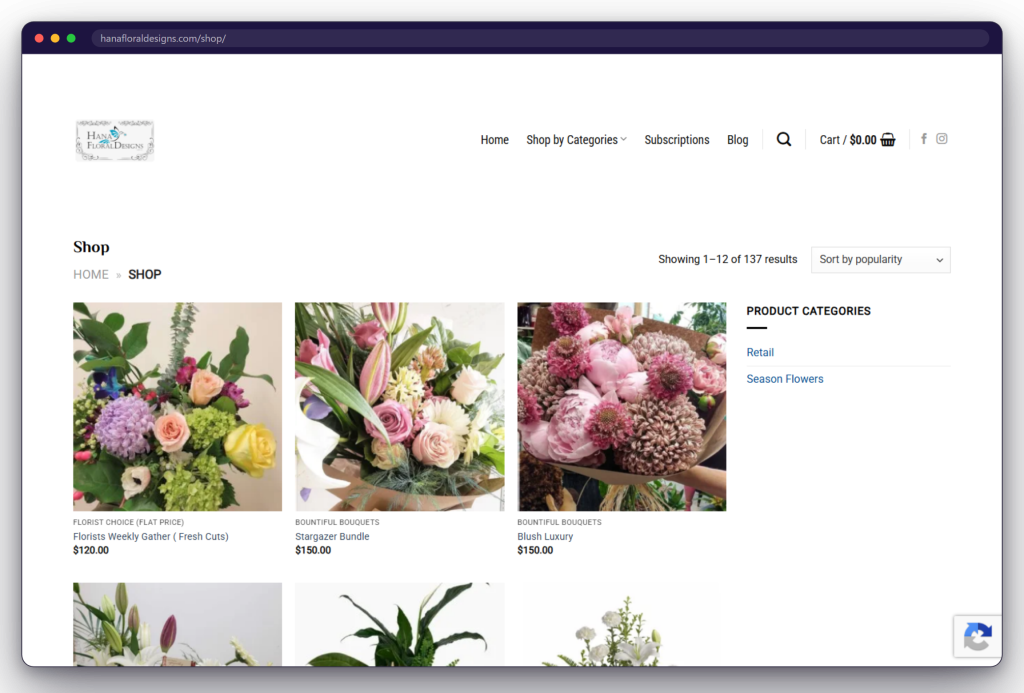
Hana Floral Designs arranges flowers for weddings, for sympathy and for ordinary Tuesdays. Those are bought in completely different frames of mind, so the store carries a shop, a set of monthly subscriptions, and a wedding enquiry that deliberately never reaches a basket.
IndustryRetail & eCommerce
ServicesWeb Design & Development, Marketplace & Ecommerce Growth
PlatformWordPress, PHP, MySQL +6 more
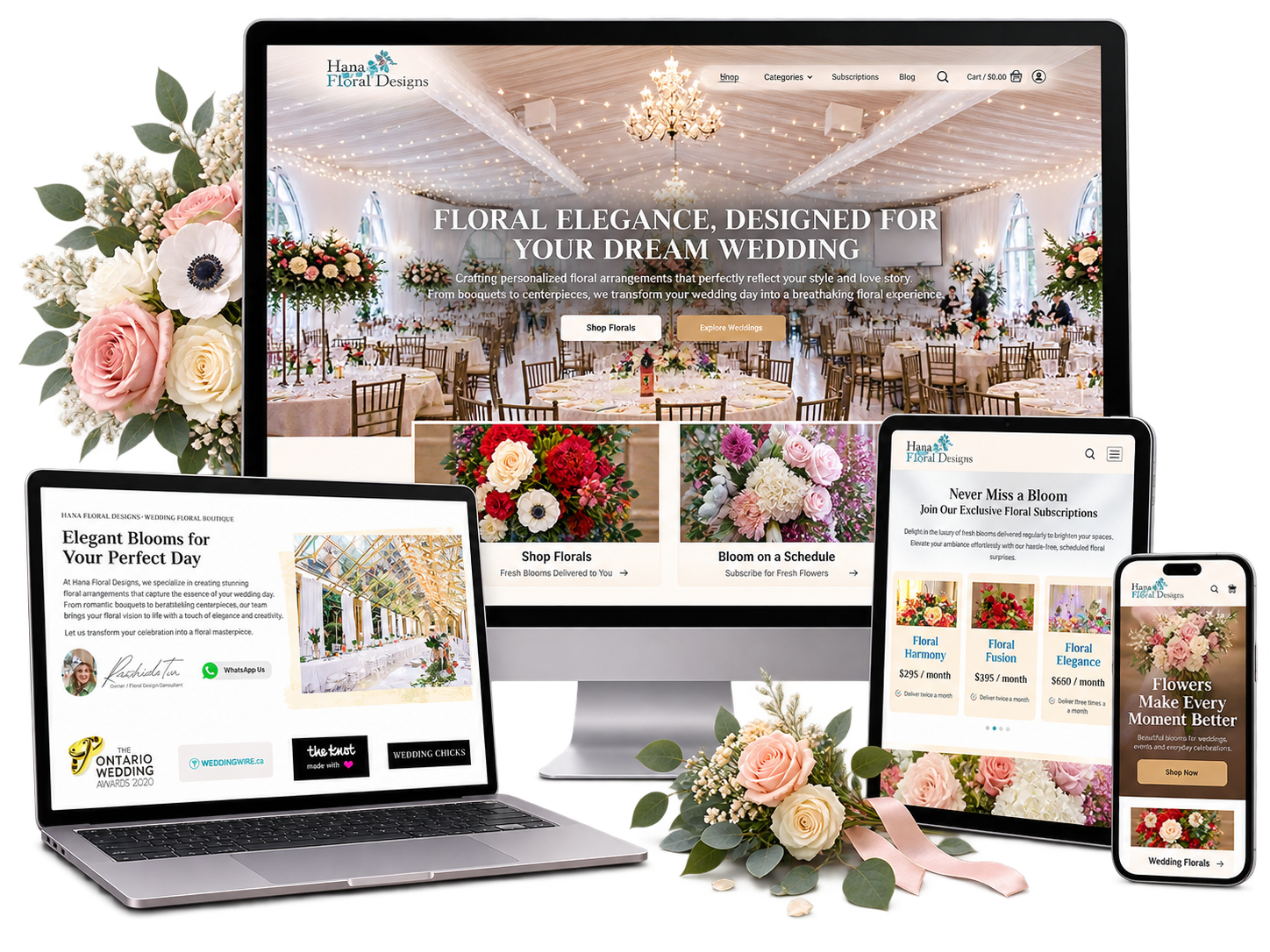
The Hana Floral Designs website shown on a laptop and a phone
The Challenge
A florist sells one craft to people in entirely different states of mind. Someone sending a birthday bouquet wants it done in three clicks. Someone arranging a funeral tribute needs a quieter page and nothing that looks like an offer. Someone planning a wedding is not buying today at all, and wants a conversation. One store has to hold all three.
  • One craft sold to very different moods
  • A birthday order should take three clicks
  • A sympathy order needs a quieter page
  • A wedding is a conversation, not a purchase
  • Recurring plans need their terms in the open
  • One catalogue, several ways of shopping it
  • Delivery areas differ between products
Project Preview

A Look at the Finished Work

Our Solution
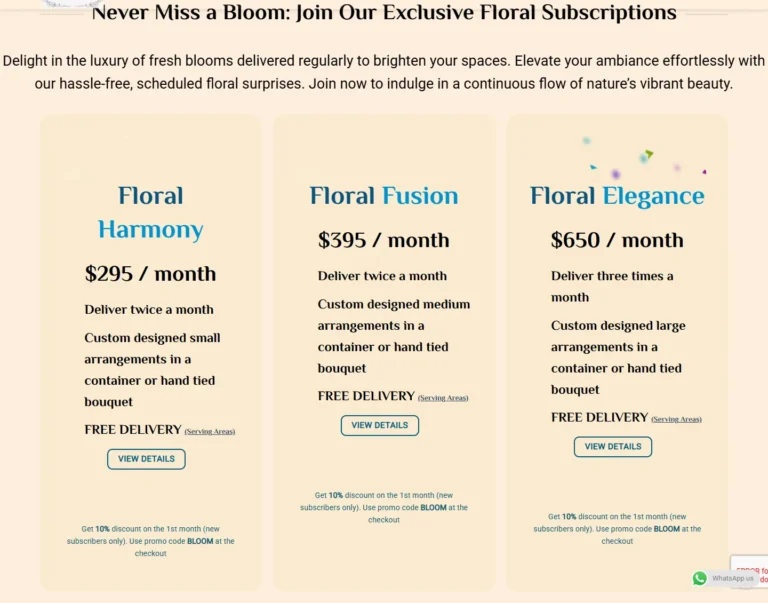
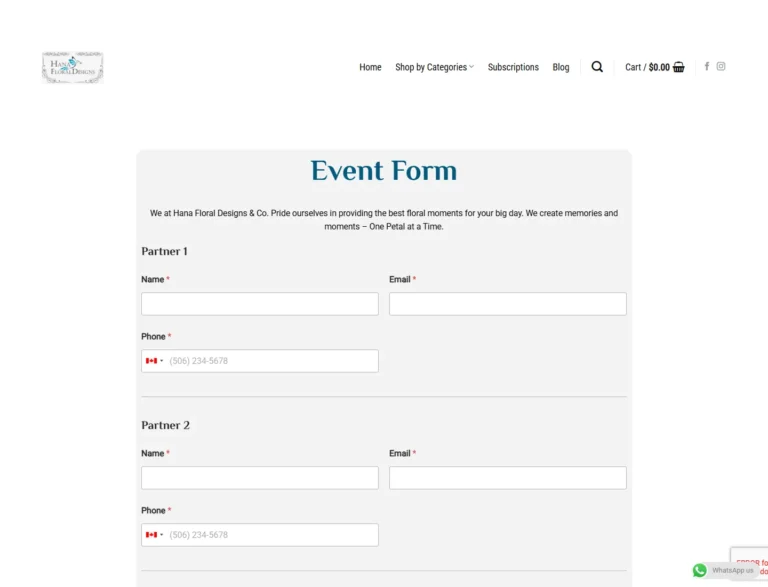
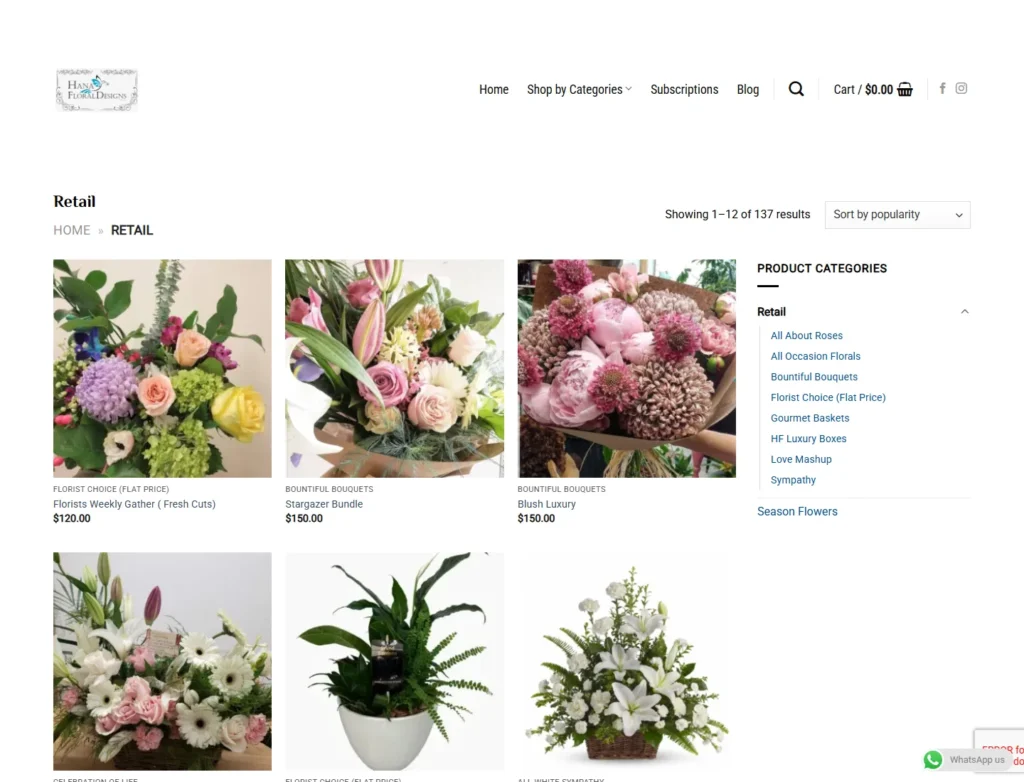
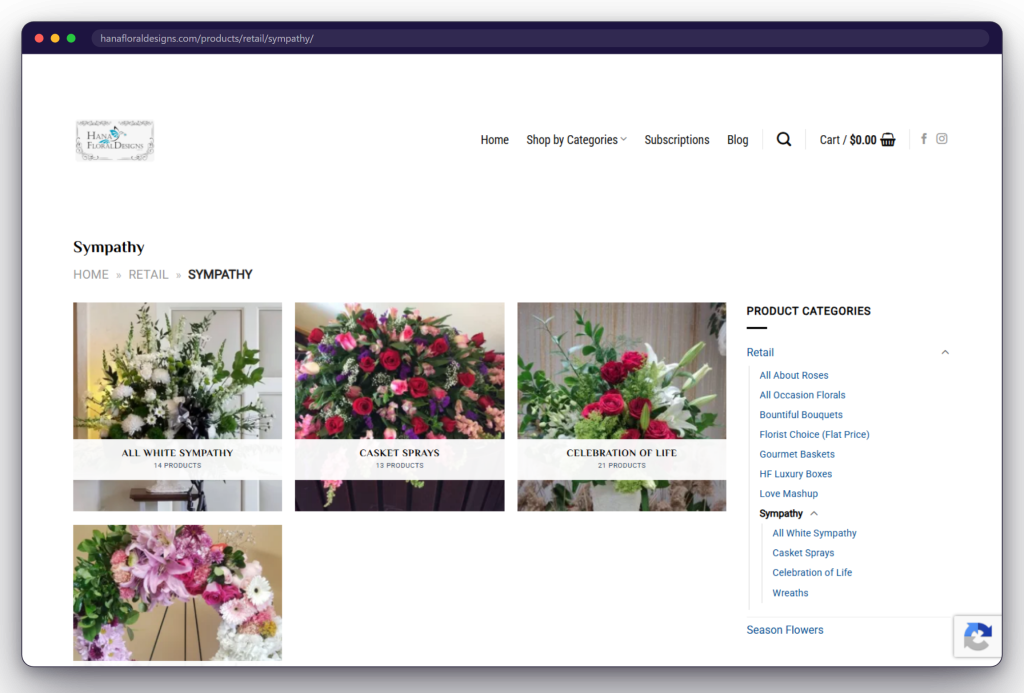
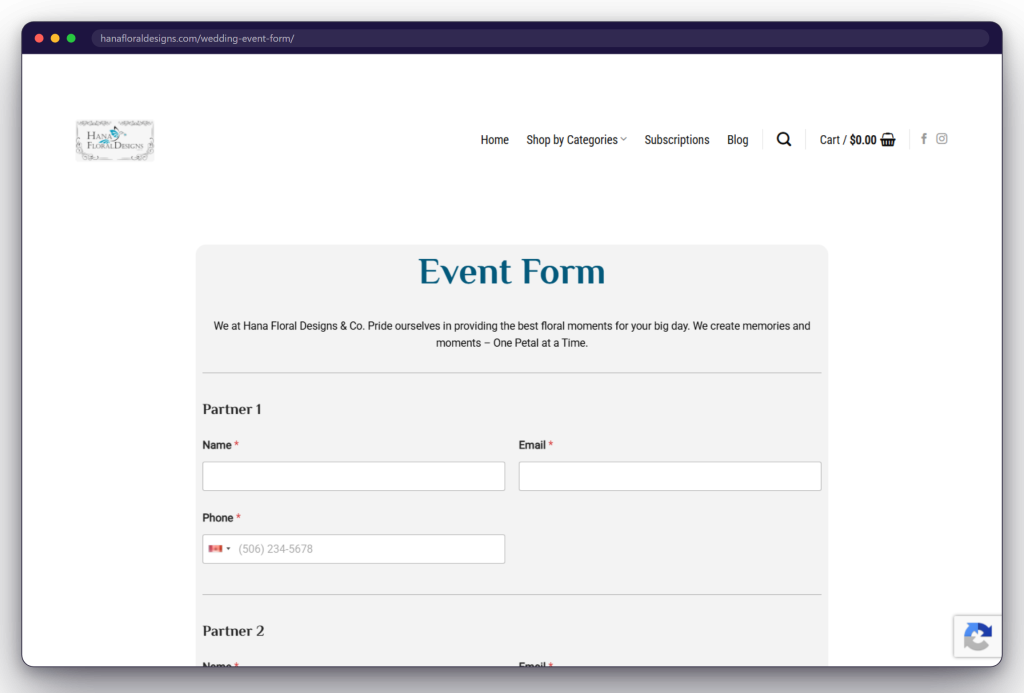
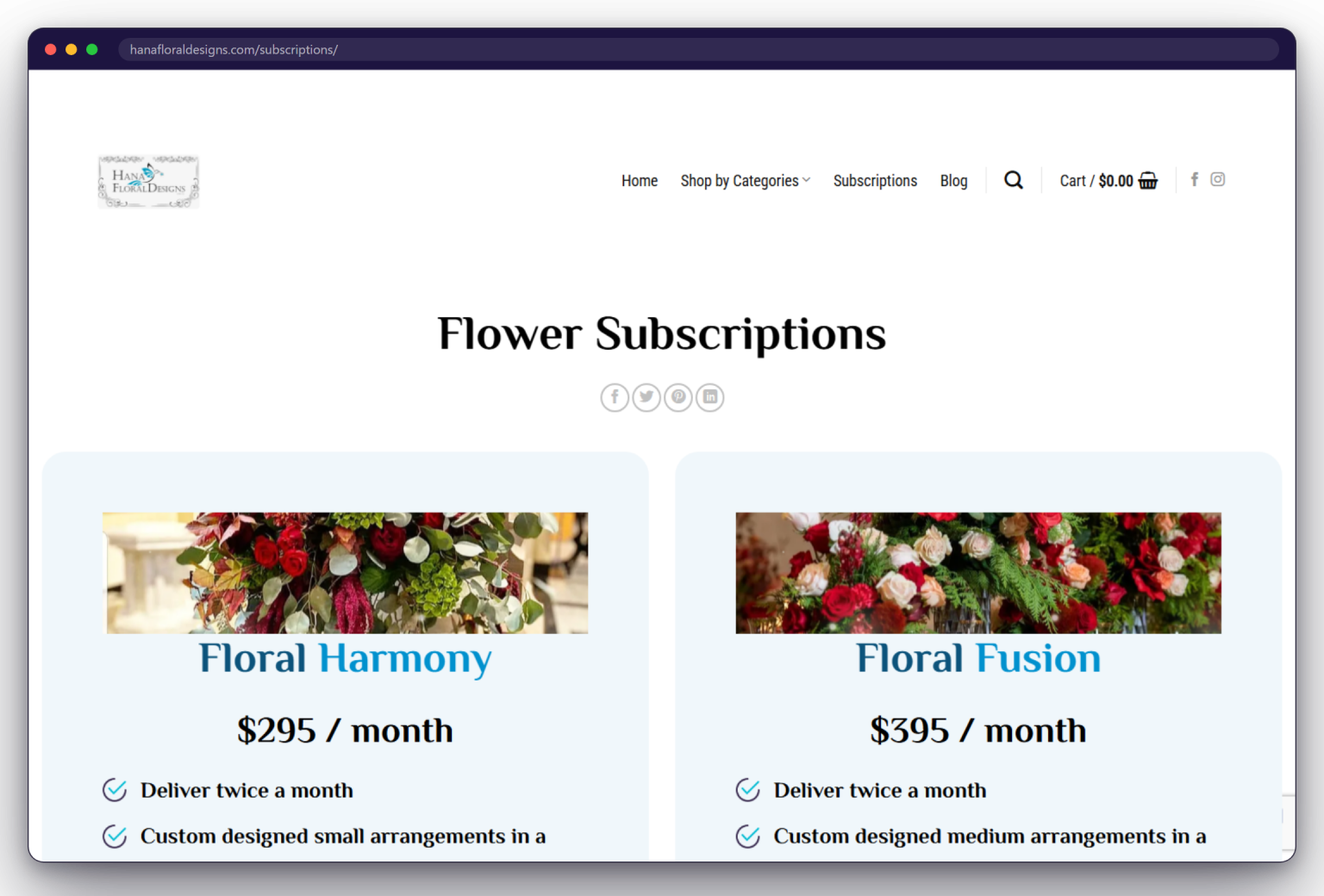
The shop takes everything that can be bought outright, with the sympathy range in its own section and worded for the occasion it serves. Three subscription tiers sit together on one page, each stating how often flowers arrive, what size they are and what the plan does not cover. Weddings avoid the basket entirely and go to an enquiry asking for both partners and a date.
  • A shop for whatever can be bought outright
  • The sympathy range kept in its own section
  • Three subscription tiers, together on a page
  • Each tier states how often flowers arrive
  • What a plan does not cover is spelled out
  • Weddings go to an enquiry, not a basket
  • That form asks for both partners and a date
  • Customer accounts, for the regulars
A page from the Hana Floral Designs website: hanafloraldesigns.com/subscriptions/
  • Buy or enquire

    Two paths, one catalogue

  • Three tiers

    Frequency and terms up front

  • Sympathy apart

    Its own section and tone

  • Weddings talk

    Both partners, and a date

Outcomes

What Changed After Launch

  • Bought and booked in one store

    Retail orders pass through the basket, weddings pass through an enquiry, and neither is forced to behave like the other.

  • Plans state their terms

    Delivery frequency, arrangement size and the occasions a plan excludes are all on the page, which is what keeps a recurring order out of dispute.

  • Sympathy handled quietly

    The sympathy range has a section and a register of its own, so the hardest order anyone places is not surrounded by promotions.

  • The florist runs the range

    Products, categories and tiers are edited by the shop, so a seasonal range appears the week it is ready.

Client Feedback

What Hana Floral Designs & Co. Says

The Big Boss Jerk home page
A Caribbean kitchen with its whole menu, its prices and its phone number on a single page.
The GSE One Electrical home page
An electrical contractor site split three ways, so a plant manager and a homeowner each get their own page.
The SIMMS Warehousing & Logistics home page
A third-party logistics site that answers a buyer’s shortlist questions before the first phone call.
Technology Stack

Built With a Modern Stack

The platform, languages and tools the finished site runs on.
FAQ

Frequently Asked Questions

Which marketplaces should we sell on first?

Start with one, and choose it on category fit and margin rather than raw traffic. Amazon has the largest audience and the strictest operational demands; Etsy suits handmade and personalised goods; eBay still performs strongly for parts, refurbished and hard-to-find items; Walmart is less crowded and easier to rank in early. We look at your margins after fees and shipping before recommending anything, because a channel that cannot carry your cost base is not an opportunity.

How long does it take to get approved and launched?

Account registration and verification typically take one to three weeks depending on the platform and how quickly business documents come together. Category approval for restricted products can add longer. Once the account is live, a straightforward catalogue can be listed and selling within a fortnight. We supervise the first weeks closely, because early metrics — late shipment rate, defect rate — set your account standing and are much cheaper to protect than to repair.

How do you stop us overselling across channels?

By making one system the single source of truth for stock and syncing everything else to it, so a sale on any channel adjusts the same number. Which system takes that role depends on how you already work — sometimes the POS, sometimes the ecommerce platform, sometimes an ERP. We also hold a small buffer on fast-moving lines, because no sync is instant and an oversell costs account health, not just a refund.

Do you handle marketplace advertising as well as listings?

Yes, though we usually fix the listing first. Advertising a poorly optimised product page raises your cost per sale and hides the real problem — paid traffic converts on the same content organic traffic does. Once titles, images, attributes and reviews are in order, we run sponsored campaigns with a target advertising cost of sale you agree in advance, and report on ad spend as a share of revenue rather than clicks.

What happens if our marketplace account is suspended?

We treat it as an emergency, because reinstatement gets harder the longer it runs. First we identify the specific policy cited rather than guessing, then prepare a plan of action addressing root cause and preventative steps in the format the platform expects. Most suspensions trace back to a measurable metric — late shipments, inauthentic claims, safety complaints — which is exactly why we monitor account health continuously rather than reacting to it.

Do we still need our own website if we sell on marketplaces?

Yes, and the reason is commercial rather than sentimental. On a marketplace you rent the customer relationship: you do not own the buyer’s contact details, you compete on the same page as substitutes, and a policy change can alter your economics overnight. Your own store carries better margins, lets you build an email list and retarget, and gives buyers who search your brand name somewhere credible to land.

Your Project Next

Want Results Like These?

Every project on this page started with one conversation about a problem. Tell us yours and we will show you what is possible.
  • Free

    Consultation

  • Transparent

    Pricing

  • No Obligation

    Quote

  • Quick

    Turnaround

Prefer to connect instantly?

Book a free 15 to 30 minute consultation with our team.
WhatsApp
Quick answers to a quick question, without the back and forth.
+1 (647) 495-9114, Mon to Fri, 9AM to 6PM EST.

Ready to start your next successful project?

Tell us what you are trying to do and we will come back with a plan and a price. No cost, and no obligation to go ahead.
  • Tailored Solutions for Your Goals
  • Experienced and Trusted Team
  • On-Time Delivery, Every Time
  • 100% Confidential and Secure